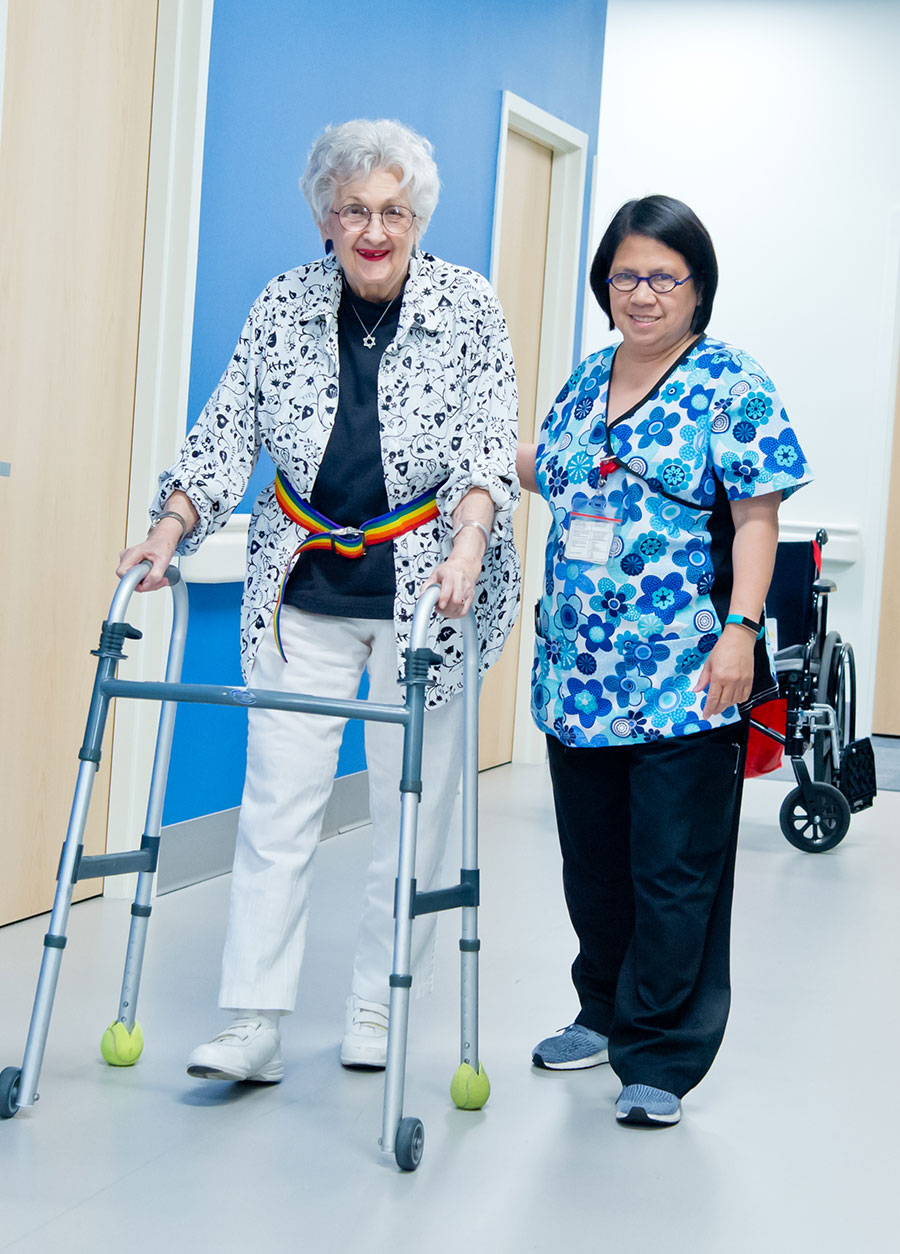
Team Approaches
The expertise of professional staff and interdisciplinary teamwork inure to the benefit of all.
- Pain Management Team
- Fall Round Team
- Skin Team
- Anticoagulation Team
- Care Plan Meetings
- Quality Assurance and Improvement
- End-of-Life Care Program
On-Site Clinics
On-site specialty clinics enable the provision of the vast majority of medical and dental services on our campus.
- Audiology
- Aural Rehabilitation
- Cardiology
- Dental
- Dermatology
- Gynecology
- Neurology
- Nurse Practitioner
- Nursing
- Ophthalmology
- Optometry
- Licensed Pharmacy
- Physical, Occupational & Speech Rehabilitative Programs
- Podiatry
- Psychiatry
- Radiology
- Urology
Specialized Units
Jewish Home & Rehab Center is proud to be a leader in the field of gerontology and on meeting the special needs of older adults.
- Short-Term and Rehabilitation Unit
- Acute Psychiatric Hospital
- Mark Ross Foundation Alzheimer's Garden Unit
Rehabilitation
Jewish Home & Rehab Center gives all in our care the full opportunity to maximize their potential through skilled and restorative rehabilitation services. Our goal is for our older adults to live as independently as possible.
- Physical Therapy
- Occupational Therapy
- Speech Therapy
- Functional Maintenance and Exercise Program
- Aural Rehabilitation
- Rehabilitation Clinic
- Fitness Center
- Massage Therapy
- Fall Rounds
Pharmacy
Convenient, personalized pharmaceutical services are provided by an on-site licensed hospital pharmacy.
Medical and Nursing
Physicians are at the Home daily and are on call 24-hours a day. All medical staff are geriatric specialists, and are complemented by Nursing, which employs more than 300 RNs, LVNs, nursing supervisors, and certified nursing assistants.
Nutrition
One of the first activities in which a new resident will participate is the noon or evening meal. Nutritional Services provides clinical nutrition, as well as food services, to residents. All kosher food (optional) is prepared in accordance with kosher dietary laws, under the supervision of the full-time rabbi.
Support Services
Through a program of holistic integration, Jewish Home & Rehab Center nurtures and sustains our residents' sense of self.
- Social Services
- Life Enrichment
- Spiritual Life